

Revocable Trust vs. Irrevocable Trust: What’s the Difference?
Posted on
Here’s the Bottom Line:
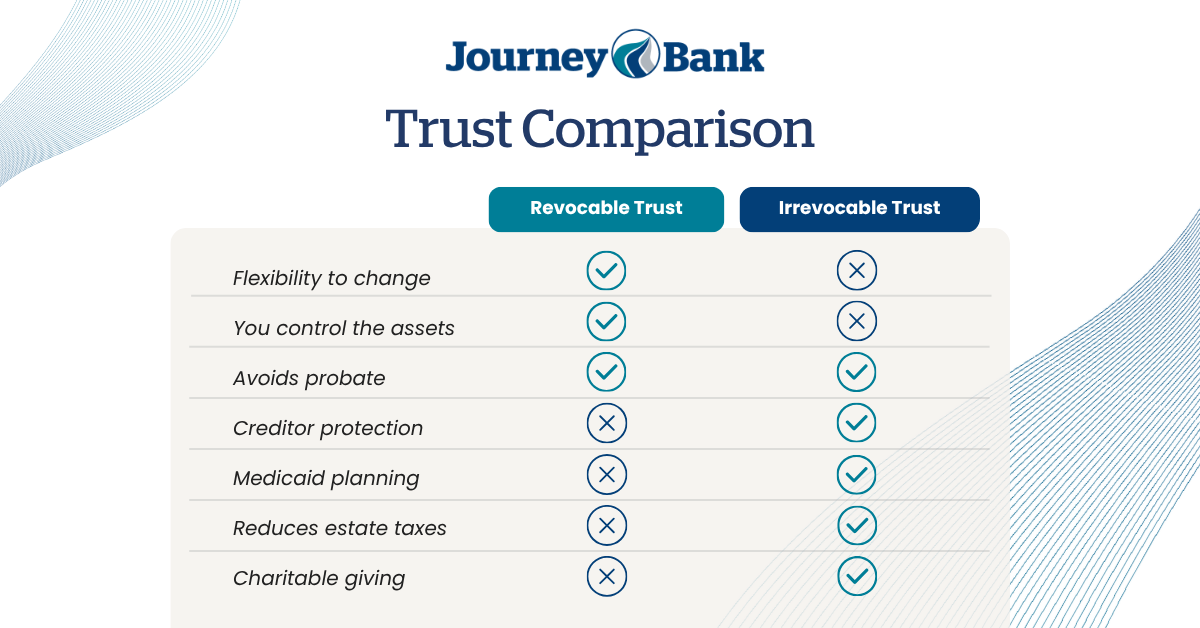
- A revocable trust is the right starting point for most families. It's flexible, avoids probate, and keeps you in control during your lifetime.
- An irrevocable trust makes sense for specific situations, including Medicaid planning, asset protection, and charitable giving. The tradeoff is giving up control.
- Most people benefit from talking to both an attorney and a trust officer before deciding. The two roles are different and work together, not interchangeably.
If you've started exploring estate planning, you've probably come across both terms and wondered what sets them apart and which one you actually need. The honest answer is that it depends on your situation, but understanding the basics makes that conversation a lot easier. Here's what Central Pennsylvania families most often ask us.
What is a revocable trust?
A revocable trust, sometimes called a living trust, is one you can change, update, or cancel at any point during your lifetime. If your family situation changes, if you acquire new assets, or if you simply change your mind, the trust can be adjusted to reflect that. It's the most common starting point for estate planning because of that flexibility.
What’s an irrevocable trust?
An irrevocable trust generally cannot be changed once it's been created. In exchange for giving up that control, you gain certain benefits, including potential protection from creditors, eligibility assistance for Medicaid, and in some cases a reduction in federal estate taxes your heirs would otherwise owe. It's a more complex tool, typically used when there's a specific goal a revocable trust can't accomplish.
What's the main difference?
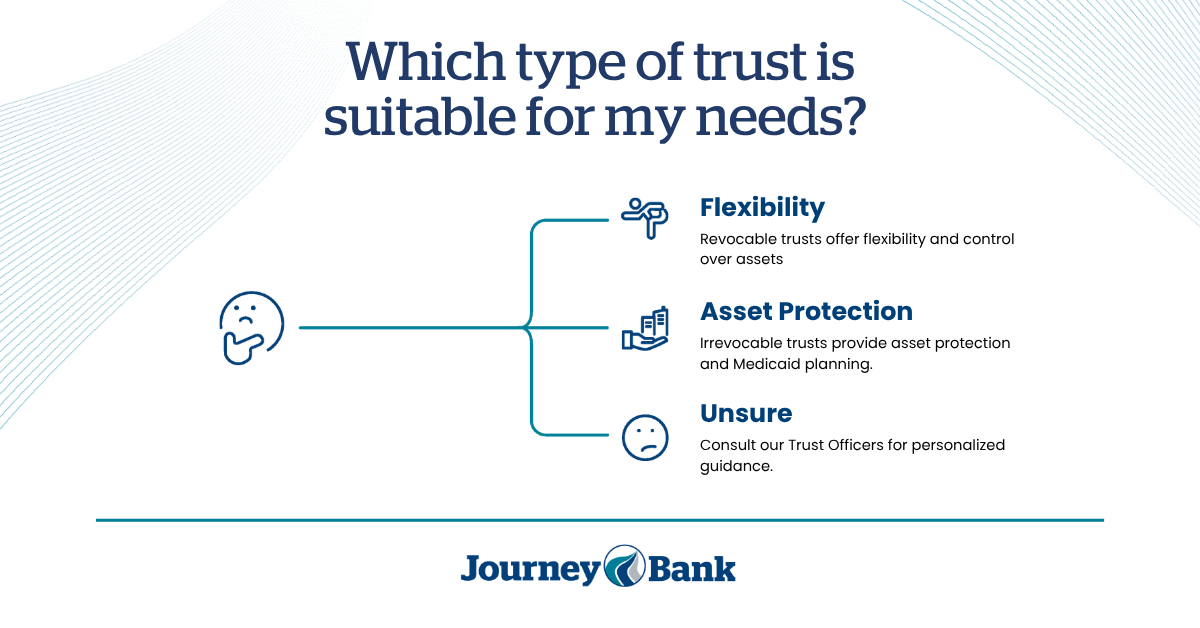
Flexibility versus protection. A revocable trust keeps you in control. You can make changes whenever your circumstances change. An irrevocable trust trades that flexibility for stronger legal and financial protections. Most families start with a revocable trust and only consider an irrevocable trust when a specific need calls for it, like Medicaid planning, asset protection, or charitable giving.
What assets should go into a trust?
This is one of the most important practical questions, and it's worth getting right. A trust only controls the assets that have been transferred into it, a process called funding the trust. An unfunded trust, one that exists on paper but holds no assets, does nothing for your family.
Common assets that go into a trust include real estate, bank accounts, investment accounts, and business interests. Some assets, like retirement accounts and life insurance policies, are typically handled through beneficiary designations instead and may not need to go into the trust directly. Getting the funding right is something your attorney and trust officer will work through with you.
Does a trust protect my assets if I need nursing home care?
It depends on the type. A revocable trust does not protect your assets from nursing home costs or Medicaid spend-down requirements. Because you still control those assets, they count toward your eligibility.
An irrevocable trust can help, but timing matters. Medicaid has a five-year look-back period, meaning assets transferred into an irrevocable trust less than five years before you apply for Medicaid may still be counted. If protecting assets from long-term care costs is a concern, this is something to plan for well in advance, not at the point when care is already needed
Can an irrevocable trust ever be changed?
In rare cases, yes. If you and all of your beneficiaries agree, a court may allow modifications, typically only when something unexpected has significantly changed your family's circumstances and the change wouldn't alter the core purpose of the trust. It's not common, and it requires court approval.
Both do, as long as the trust is properly funded. That's one of the main reasons people set up a trust over a will. A will has to go through probate court, which is public, can take months, and often involves legal fees. A trust transfers assets to your beneficiaries directly.
Does an irrevocable trust protect assets from creditors or estate taxes?
It can, in certain situations. An irrevocable trust may shield your estate from creditors and lawsuits, and it may reduce federal estate taxes, though it does not affect Pennsylvania inheritance taxes. A revocable trust does not offer this kind of protection. Because the rules here are specific to your situation, this is something to work through with an attorney and a tax professional.
What happens to a revocable trust when I die?
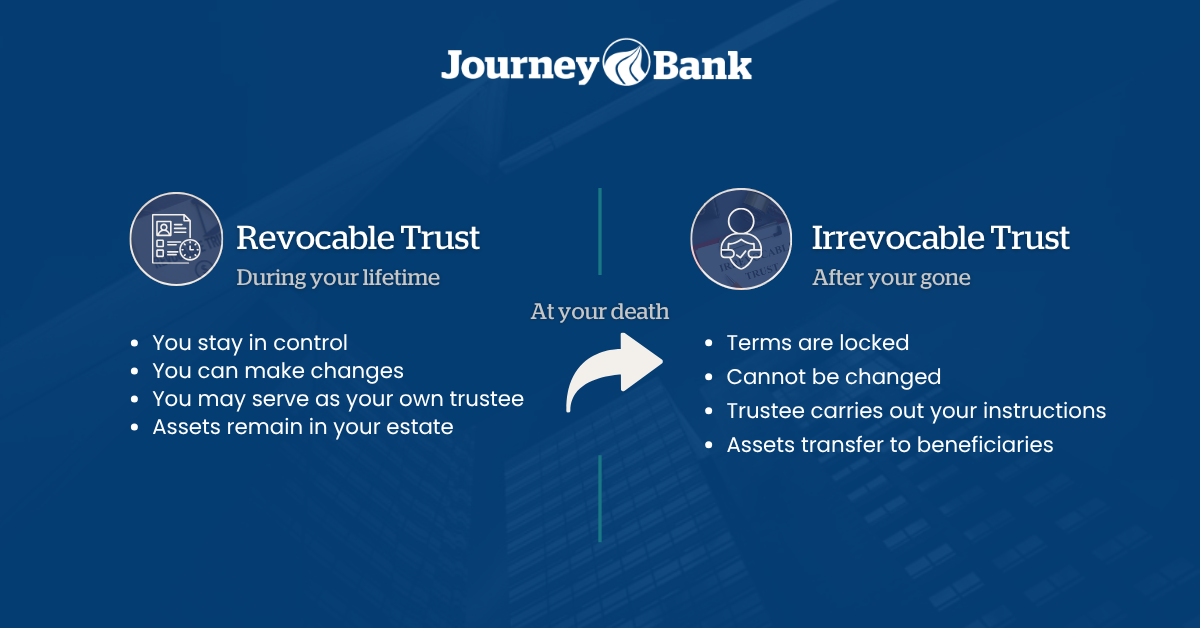
It automatically becomes irrevocable. At that point it can no longer be changed, and your trustee carries out the instructions you put in place.
Which one is right for me?
For most families, a revocable trust is the right place to start. It covers the core goals, avoiding probate, protecting your family, and giving you control over how your assets are managed, while keeping your options open as life changes. An irrevocable trust makes sense when you have a more specific need that requires the tradeoff of giving up control.
The best way to know for certain is to talk it through with someone who understands your situation.
Can I have both a revocable and an irrevocable trust?
Yes, and some people do. A common example is someone who has a revocable living trust for general estate planning and a separate irrevocable trust set up specifically for Medicaid planning or to provide for a family member with special needs. The two serve different purposes and can work alongside each other. If you think you might need both, that's exactly the kind of situation a trust officer can help you sort out.
Can I be my own trustee?
With a revocable trust, yes. Most people who set up a revocable trust serve as their own trustee during their lifetime, which is part of what makes it so flexible. You maintain full control over your assets and can make changes whenever you need to. You would simply name a successor trustee, such as a family member, an attorney, or a bank's trust division, to step in if you become incapacitated or after you're gone.
With an irrevocable trust, generally no. Because you've given up ownership and control of the assets, you typically cannot serve as your own trustee. That's part of the tradeoff.
What assets should go into a trust?
This is one of the most important practical questions, and it's worth getting right. A trust only controls the assets that have been transferred into it, a process called funding the trust. An unfunded trust, one that exists on paper but holds no assets, does nothing for your family.
Common assets that go into a trust include real estate, bank accounts, investment accounts, and business interests. Some assets, like retirement accounts and life insurance policies, are typically handled through beneficiary designations instead and may not need to go into the trust directly. Getting the funding right is something your attorney and trust officer will work through with you.
Does Pennsylvania have an estate tax?
Pennsylvania does not have a state estate tax, but it does have an inheritance tax, which is different. The inheritance tax is paid by the people who receive your assets, not your estate, and the rate depends on their relationship to you. A spouse pays nothing. Children pay 4.5 percent. Siblings pay 12 percent. Other heirs pay 15 percent.
Federal estate taxes are separate and only apply to very large estates, currently those above approximately $13 million per person. Most Pennsylvania families won't owe federal estate tax, but it's worth confirming with an attorney if your estate is substantial.
Schedule a Consultation with Us and Your Attorney
Schedule a free consultation with Journey Bank's Trust Services team. Our trust officers are local to Central Pennsylvania and can help you figure out which type of trust fits your family's goals, with no obligation and no jargon. If you're still figuring out whether you need a trust at all, start with our post Do I Need a Trust? 8 Signs It's Time to Talk to a Trust Officer.


