

Do I Need a Trust? 8 Signs It's Time to Talk to a Trust Officer
Posted on
If you've ever wondered whether you need a trust, or whether a will is enough, you're not alone. It's one of the most common estate planning questions we hear from Central Pennsylvania families, and the answer isn't always obvious.
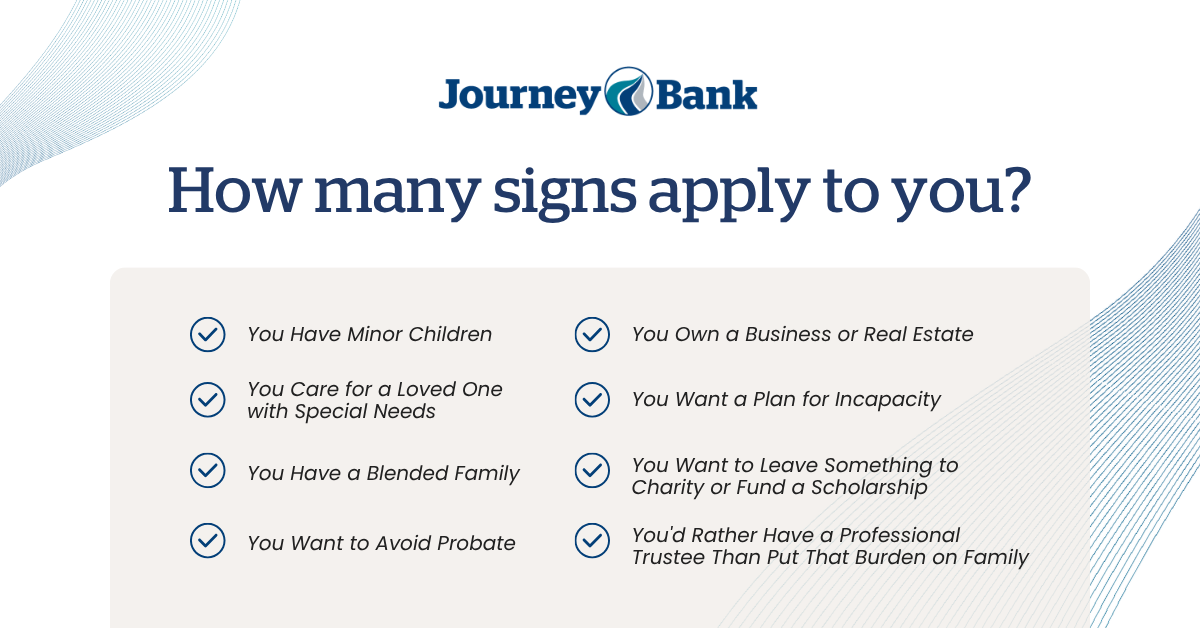
The truth is, a trust isn't just for the wealthy. It's a planning tool that can benefit anyone who owns a home, has retirement savings, or has people depending on them. To help you figure out whether one makes sense for your situation, we put together this guide of eight signs that it may be time to have a conversation with a trust officer.
One thing worth knowing is that a will and a trust serve different purposes, and many people benefit from having both. A will defines how your assets are distributed after you're gone. A trust goes further as it lets you manage and protect your assets both during your lifetime and beyond, and unlike a will, it doesn't go through probate. That means your family gets faster access to what you've left them, with more privacy and less cost.
There are two main types of trusts. A revocable trust can be changed or cancelled during your lifetime. It's the most flexible option and the most common starting point. An irrevocable trust is harder to modify once it's in place, but it offers stronger asset protection and potential tax benefits in certain situations. We'll touch on both throughout this guide.
Ready? Here are eight signs a trust may be worth considering.
1. You Have Minor Children
Most parents don't want their kids to receive a large sum of money all at once, especially at 18. Under Pennsylvania law, minors can't legally manage an inheritance, so without a trust, the state steps in to appoint a guardian until your child's 18th birthday. At that point, they receive everything in a lump sum, with no strings attached.
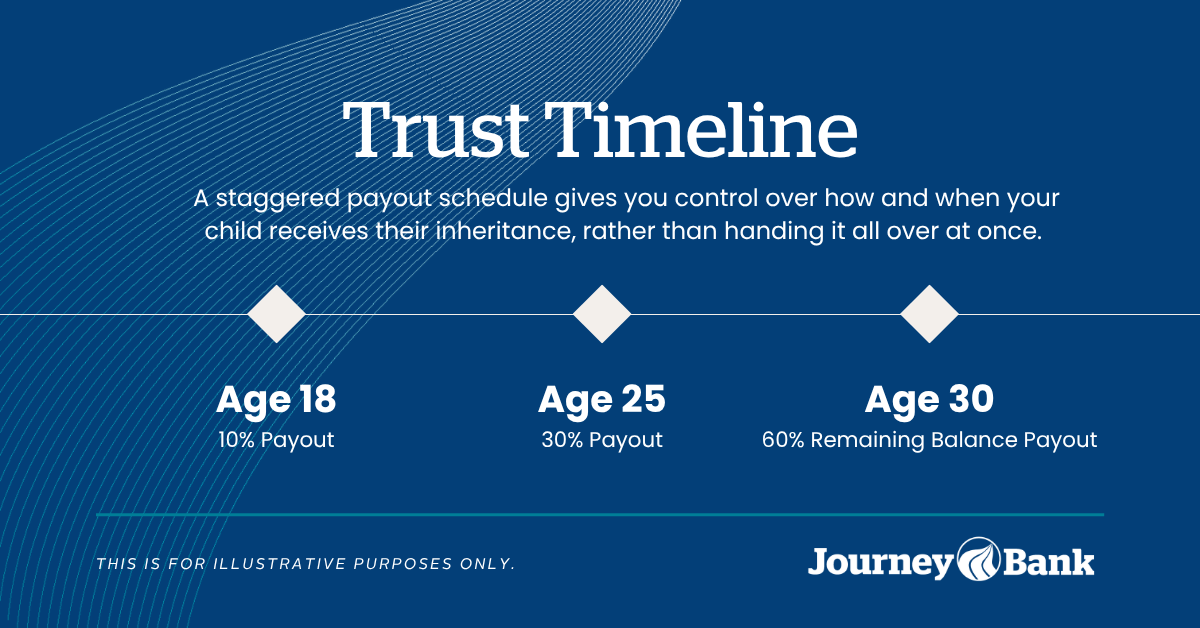
A trust gives you a lot more say in how that plays out. You can set up staggered payouts tied to age or milestones like graduating college, or allow your trustee to release funds for specific needs like education, healthcare, and living expenses before then. You can also build in protections that shield the inheritance from a child's future creditors or divorce.>
2. You Care for a Loved One with Special Needs
If someone in your family has a disability or special needs, a special needs trust can provide ongoing financial support without affecting the government benefits they depend on, including Medicaid and Social Security. That's the key distinction: assets held in a properly structured special needs trust generally don't count against benefit eligibility the way a direct inheritance would.
What the trust can cover varies, but it typically includes things like education, transportation, personal care, assistive technology, and services not covered by Medicaid. A trust officer can walk you through what's possible for your specific situation.
3. You Have a Blended Family
Second marriages, stepchildren, and complex family dynamics are increasingly common, and they can make estate planning genuinely complicated without the right structure in place. A trust lets you be specific about who receives what and when, in a way a will alone often can't.
For example, you might want to make sure your own children from a previous relationship receive their inheritance directly, rather than leaving that to chance. Or you may want to provide for a current spouse during their lifetime while ensuring remaining assets eventually pass to your children. A trust can also include provisions for different scenarios, like what happens if your spouse remarries.
Without that kind of structure, even well-intentioned families can end up in costly disputes. A trust removes the ambiguity.
4. You Want to Avoid Probate
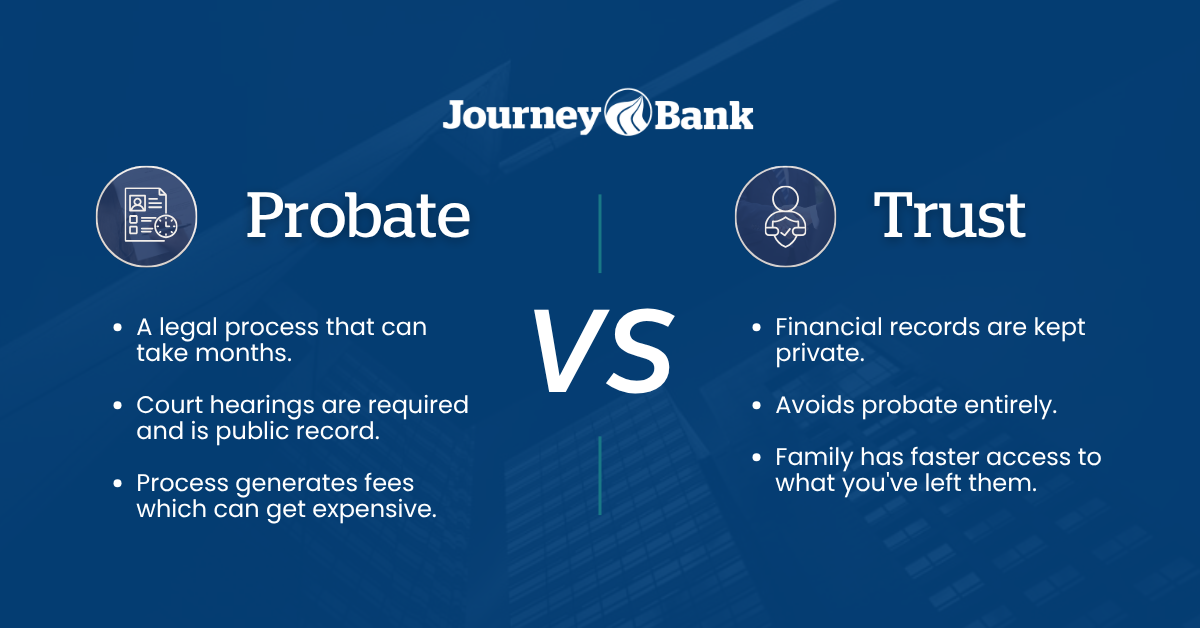
When someone dies with only a will, that will goes through probate court, a legal process that can take months, require court hearings, and generate fees. It's also public record, meaning the details of your estate are available to anyone who looks. A trust avoids probate entirely, which means your family gets faster access to what you've left them and your financial affairs stay private.
5. You Own a Business or Real Estate
A trust can be especially valuable if you own a business, rental properties, or real estate beyond your primary home. Without one, your heirs could face a drawn-out legal process that disrupts business operations or delays property transfers. A trust lets you decide in advance how the business is managed or sold and who takes over.
There's also a property tax consideration worth knowing about. Placing real estate in an irrevocable trust may prevent a reassessment at transfer, since the trust avoids a formal change of ownership. A revocable trust may not offer the same protection. A trust officer can walk you through how this applies to your specific properties.
6. You Want a Plan for Incapacity
A trust isn't only for what happens after you're gone. If you were ever incapacitated due to a stroke, dementia, or another health event, a trust ensures someone you've chosen can step in immediately to manage your finances and carry out your wishes. Without that structure in place, your family may face a court process to establish guardianship, at a time when they're already under enormous stress.
7. You Want to Leave Something to a Charity or Fund a Scholarship
If philanthropy is part of your legacy, a charitable trust is a way to structure those gifts, so they last and work efficiently from a tax standpoint. There are a couple of approaches depending on your goals — one provides you with income during your lifetime with the remainder going to charity, and another directs funds to a charity first with remaining assets passing to your beneficiaries. A trust officer can help you understand which structure fits what you're trying to accomplish.
8. You’d Rather Have a Professional Trustee Than Put That Burden on Family
Serving as a trustee is a significant responsibility. It involves investing and distributing assets according to state law and the terms of the trust, filing tax returns, documenting all activity, and managing distributions over what can be many years. Asking a family member or close friend to take that on can strain the relationship, especially when there are multiple beneficiaries with competing expectations.
This is why many families choose a bank's trust division to serve as trustee. You get a team of people who understand trust law and fiduciary responsibilities, with no gaps in continuity if one person leaves. Journey Bank's trust officers are local to Central Pennsylvania and have managed trusts for families in this region for generations. If you're weighing your options, it's worth a conversation.
Frequently Asked Questions:
Do I Need a Trust?
Do I still need a will if I have a trust?
Yes, and most people who set up a trust have both. A will covers things a trust doesn't, like naming a guardian for minor children or directing assets that were never transferred into the trust. Think of them as complementary, not interchangeable.
Do I need a trust if I already have a will?
It depends on your situation, but a will alone has real limitations. It goes through probate, becomes public record, and offers no protection if you become incapacitated during your lifetime. If any of the eight signs in this post apply to you, a trust is worth a serious conversation.
Why would I need a trust?
The short answer is control. A trust lets you decide exactly how your assets are managed and distributed, both now and after you're gone. It can also protect your family from a lengthy court process and give you a plan for your own care if something unexpected happens.
When should I set up a trust?
Sooner than most people think. Life changes quickly, and a trust is much easier to put in place before a health event, a family change, or a business transition than after. If two or more of the signs in this post apply to you, that's a good signal to start the conversation now.
Is a Trust Right for You?
If two or more of the signs in this post apply to your situation, the next step is simple. Schedule a free consultation with Journey Bank's Trust Services team. There's no obligation, just a local trust officer who knows Central Pennsylvania and can help you understand your options.
Trust and investment services may include both FDIC-insured and non-FDIC insured products.
Non-deposit products are not insured by the FDIC, not a deposit of, or guaranteed by, the depository institution; subject to investment risks, including possible loss of the principal amount invested.
This blog is for informational purposes only. Journey Bank does not provide legal counsel or tax advice. Please consult your attorney or accountant.